Revamping Patient Care with FHIR Order Entry Transforming Digital Health in the USA

Digital health is undergoing a revolution, reshaping how healthcare is delivered and experienced in the USA. One crucial piece of this transformation involves how clinicians order tests, medications, and other services, a process increasingly managed digitally. This is where FHIR order entry comes into play, offering a standardized and streamlined approach to an otherwise complex and often fragmented process.

Understanding the Power of Interoperability

Imagine a world where healthcare systems seamlessly communicate with each other, sharing vital patient information with ease and accuracy. This is the promise of interoperability, and it’s the foundation upon which FHIR, or Fast Healthcare Interoperability Resources, is built. FHIR provides a common language for different systems to “talk” to one another, breaking down the silos that have historically hampered healthcare delivery. But how does this relate to ordering?

The traditional order entry process can be cumbersome. It frequently involves navigating different systems, manually entering data, and dealing with inconsistent formats. This can lead to errors, delays, and frustration for both clinicians and patients. It also impedes the efficient flow of information, hindering coordinated care.

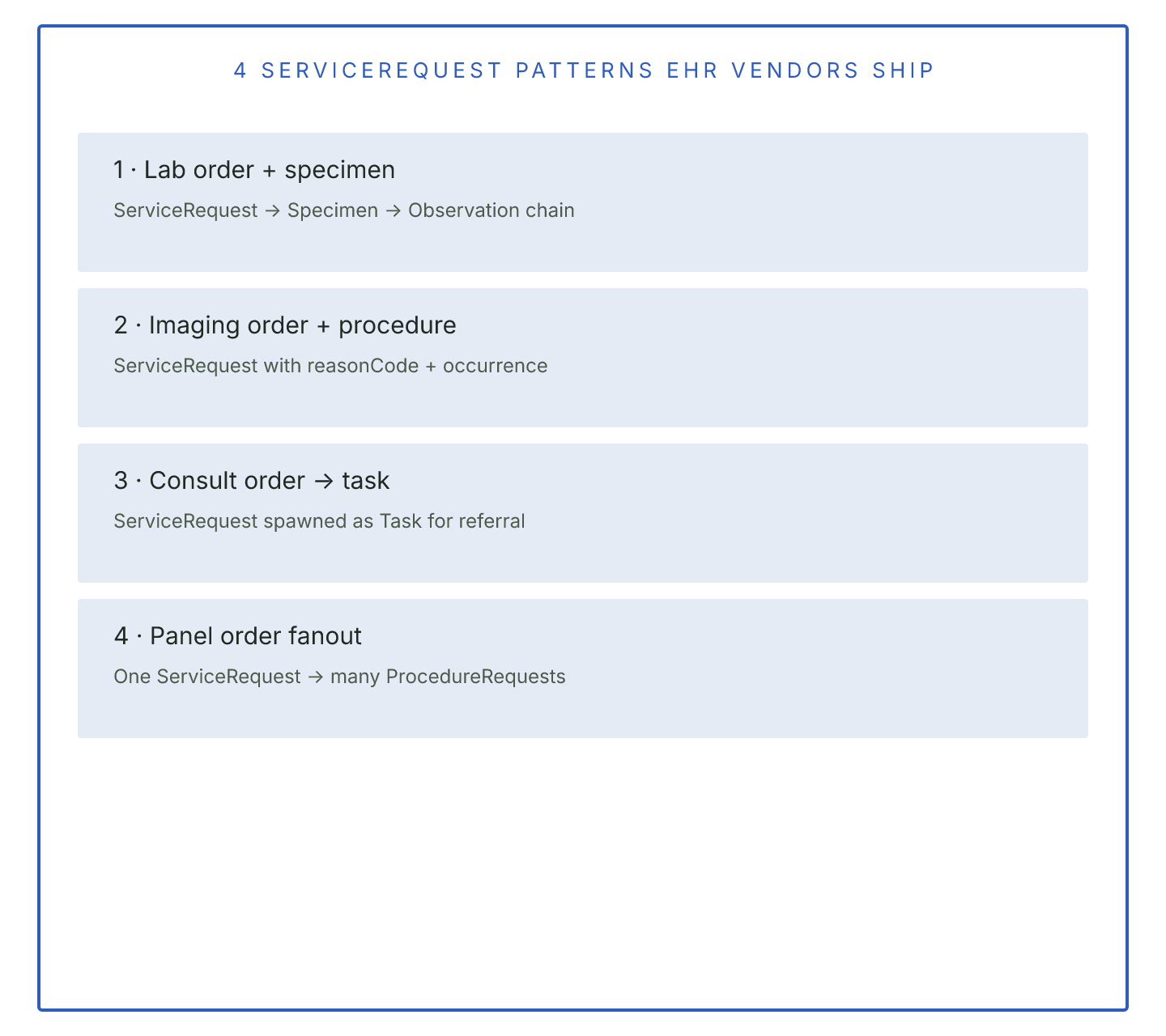
FHIR order entry addresses these challenges by providing a standardized way to create, transmit, and fulfill orders electronically. Instead of relying on proprietary systems and manual processes, clinicians can use FHIR-compliant applications to generate orders that are easily understood and processed by other systems, such as pharmacies, laboratories, and imaging centers.

Benefits that Resonate Across Healthcare

The advantages of adopting FHIR order entry are significant and far-reaching. Let’s look at some of the key benefits −

  • Reduced Errors − Standardized data formats and automated processes minimize the risk of human error, leading to more accurate orders and safer patient care. Fewer errors mean less rework, less confusion, and happier patients.
  • Improved Efficiency − By streamlining the ordering process, FHIR saves clinicians valuable time and allows them to focus on patient care. Automated workflows reduce administrative burden, freeing up resources for more critical tasks.
  • Enhanced Interoperability − This is the cornerstone of FHIR. Seamless data exchange between systems ensures that all relevant parties have access to the information they need to make informed decisions.
  • Better Patient Outcomes − Ultimately, all these benefits contribute to improved patient outcomes. Accurate orders, efficient workflows, and coordinated care lead to better diagnoses, more effective treatments, and healthier patients.
  • Cost Savings − While the initial investment in implementing FHIR may seem daunting, the long-term cost savings are substantial. Reduced errors, improved efficiency, and better resource allocation translate into significant financial benefits.

Navigating the Implementation Landscape

While the benefits of FHIR order entry are clear, implementing it can be a complex undertaking. It requires careful planning, collaboration, and a commitment to interoperability. Here are some key considerations for healthcare organizations looking to adopt FHIR order entry −

  • Choose the Right Technology − Select FHIR-compliant applications and platforms that meet your specific needs and integrate seamlessly with your existing systems.
  • Establish Clear Standards − Develop clear guidelines and protocols for order entry to ensure consistency and accuracy.
  • Train Your Staff − Provide comprehensive training to clinicians and other healthcare professionals on how to use FHIR-compliant systems effectively.
  • Collaborate with Partners − Work closely with vendors, other healthcare organizations, and standards bodies to ensure interoperability.
  • Prioritize Security and Privacy − Implement robust security measures to protect patient data and comply with privacy regulations.

The Future is Interoperable

FHIR order entry is not just a technological upgrade; it’s a fundamental shift in how healthcare is delivered. By embracing interoperability and standardization, the USA can unlock the full potential of digital health and create a more efficient, effective, and patient-centered healthcare system.

It’s a journey, and the adoption of FHIR based order entry is a key component in achieving that vision. As technology continues to evolve, the ability to seamlessly share and exchange healthcare information will only become more critical.