Keeping Your Digital Health Journey Smooth with Essential FHIR Resources for Better Care Delivery

Digital healthcare is transforming how we receive medical attention in the United States. But with so many new technologies and systems, how can we make sure everything works together seamlessly? That’s where FHIR comes in.

Understanding FHIR’s Role in Modern Healthcare

FHIR, or Fast Healthcare Interoperability Resources, is a standard for exchanging healthcare information electronically. Think of it as a universal language that allows different healthcare systems to communicate with each other, no matter who made them or how they were designed. Why is this important? Imagine going to a new doctor. Instead of filling out endless forms or trying to remember every detail of your medical history, your new doctor could access your records securely and easily from your previous healthcare provider. FHIR makes that possible.

This seamless exchange of information means fewer errors, quicker diagnoses, and better-coordinated care. No more faxes, no more lost paperwork, just efficient and accurate information sharing. FHIR focuses on standardized data formats and application programming interfaces (APIs). This makes it easier for developers to create new healthcare apps and tools that can easily integrate with existing systems. This fosters innovation and gives patients more control over their own health data.

Key FHIR Resources for Improved Care

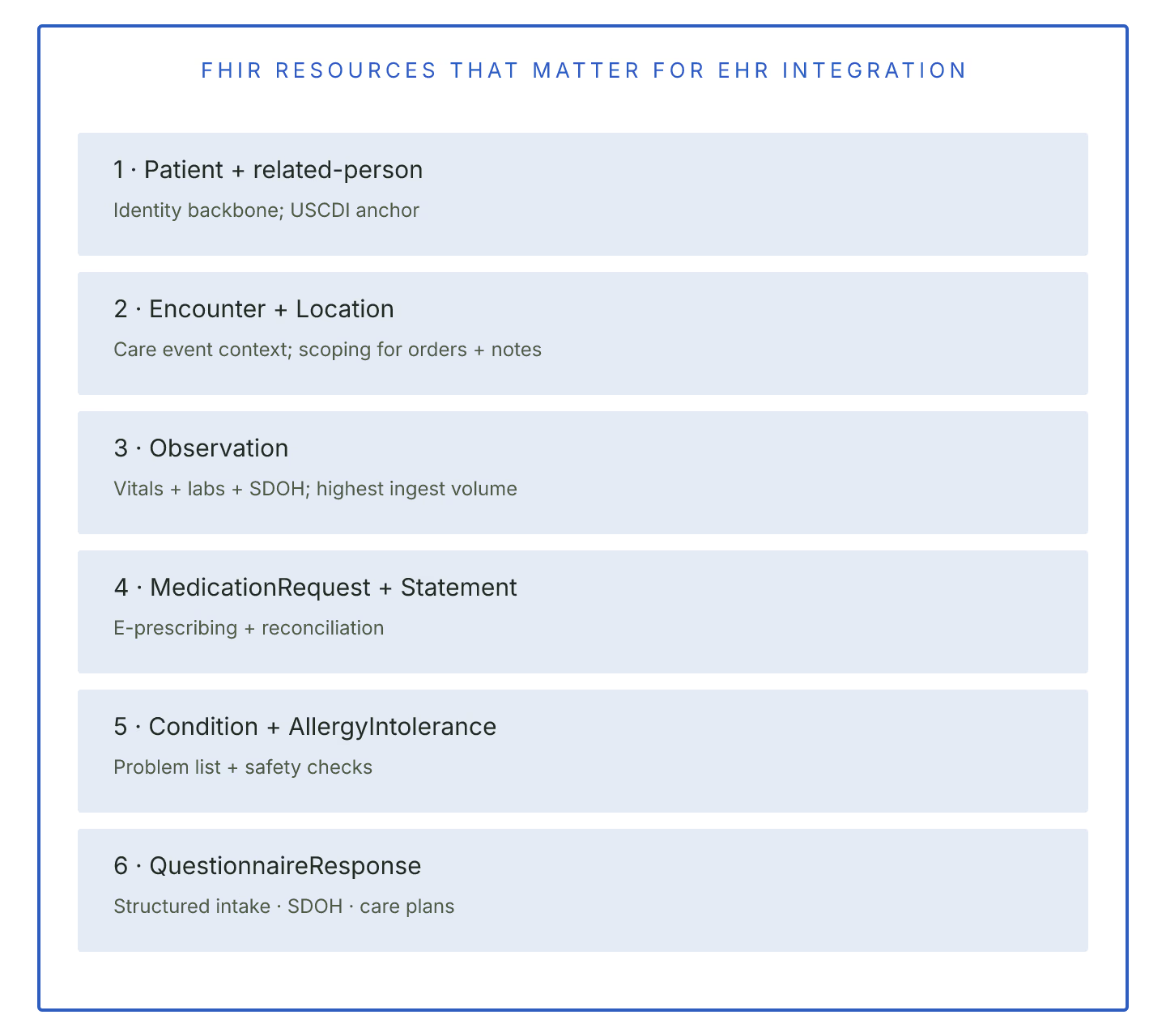
Let’s look at some of the most important FHIR resources and how they improve healthcare delivery.

  • Patient, This resource contains all the essential details about a patient, including their name, date of birth, contact information, and other demographic data. By standardizing this information, FHIR makes it easier to identify patients correctly across different systems. It reduces the risk of errors and ensures that healthcare providers always have the right information at their fingertips.

  • Observation, This resource captures clinical observations, such as vital signs, lab results, and diagnostic imaging reports. With FHIR, these observations can be easily shared between healthcare providers, giving them a more complete picture of a patient’s health status. This leads to more informed decisions and better patient outcomes.

  • MedicationRequest, This resource handles medication orders and prescriptions. With FHIR, healthcare providers can easily access a patient’s medication history, check for potential drug interactions, and ensure that they are prescribing the right medications at the right doses. This improves medication safety and reduces the risk of adverse events.

  • Condition, This resource records information about a patient’s medical conditions, such as diagnoses, allergies, and chronic illnesses. By standardizing this information, FHIR makes it easier for healthcare providers to track a patient’s health over time and identify potential health risks.

  • Procedure, This resource documents medical procedures that have been performed on a patient, such as surgeries, vaccinations, and diagnostic tests. With FHIR, healthcare providers can easily access a patient’s procedure history, ensuring that they have a complete understanding of their medical background.

These are just a few examples of the many FHIR resources available. Each one plays a crucial role in streamlining healthcare workflows and improving the quality of care.

Using FHIR Resources for Patient Empowerment

FHIR empowers patients by giving them more control over their health data. With FHIR-enabled apps, patients can access their medical records, track their health progress, and share their data with their healthcare providers. This level of transparency and control can lead to better engagement and improved health outcomes.

Imagine being able to monitor your blood pressure from home and automatically share that data with your doctor. Or being able to easily access your vaccination records and share them with your child’s school. FHIR makes these scenarios possible, giving patients the tools they need to take an active role in their healthcare.

The Future of FHIR in US Healthcare

FHIR is not just a passing trend; it’s the future of healthcare interoperability. As more healthcare organizations adopt FHIR standards, we can expect to see even greater improvements in care coordination, patient engagement, and overall health outcomes.

The US government is actively promoting the adoption of FHIR through various initiatives and regulations. This includes requiring healthcare providers to use FHIR-based APIs to give patients access to their electronic health records. These efforts are helping to accelerate the adoption of FHIR and unlock its full potential.

Practical FHIR implementation

How can healthcare providers and developers start using these FHIR resource implementations effectively? Start with educational courses and training programs that can help them understand FHIR standards and best practices. Also, they can leverage open-source FHIR libraries and tools to build and test FHIR-compliant applications. And, of course, actively participate in FHIR communities and forums to share knowledge and collaborate with other experts.

By embracing FHIR, we can create a more connected, efficient, and patient-centered healthcare system in the United States. It’s a journey towards a future where healthcare information flows freely and seamlessly, empowering both patients and providers to make better decisions and achieve better health outcomes.