Digital health care is rapidly changing the American medical landscape. But what fuels this transformation? What allows different systems to communicate and share information securely and efficiently? A significant part of the answer lies in a technology you might not be familiar with, but one that is quietly revolutionizing how health data is handled − fhir bulk data.
What are FHIR Bundles?
Imagine needing to send a package containing multiple important documents. Instead of sending each document individually, which could lead to confusion and disorganization, you bundle them together, clearly labeled and ready for delivery. FHIR bundles operate on a similar principle, but with medical data.
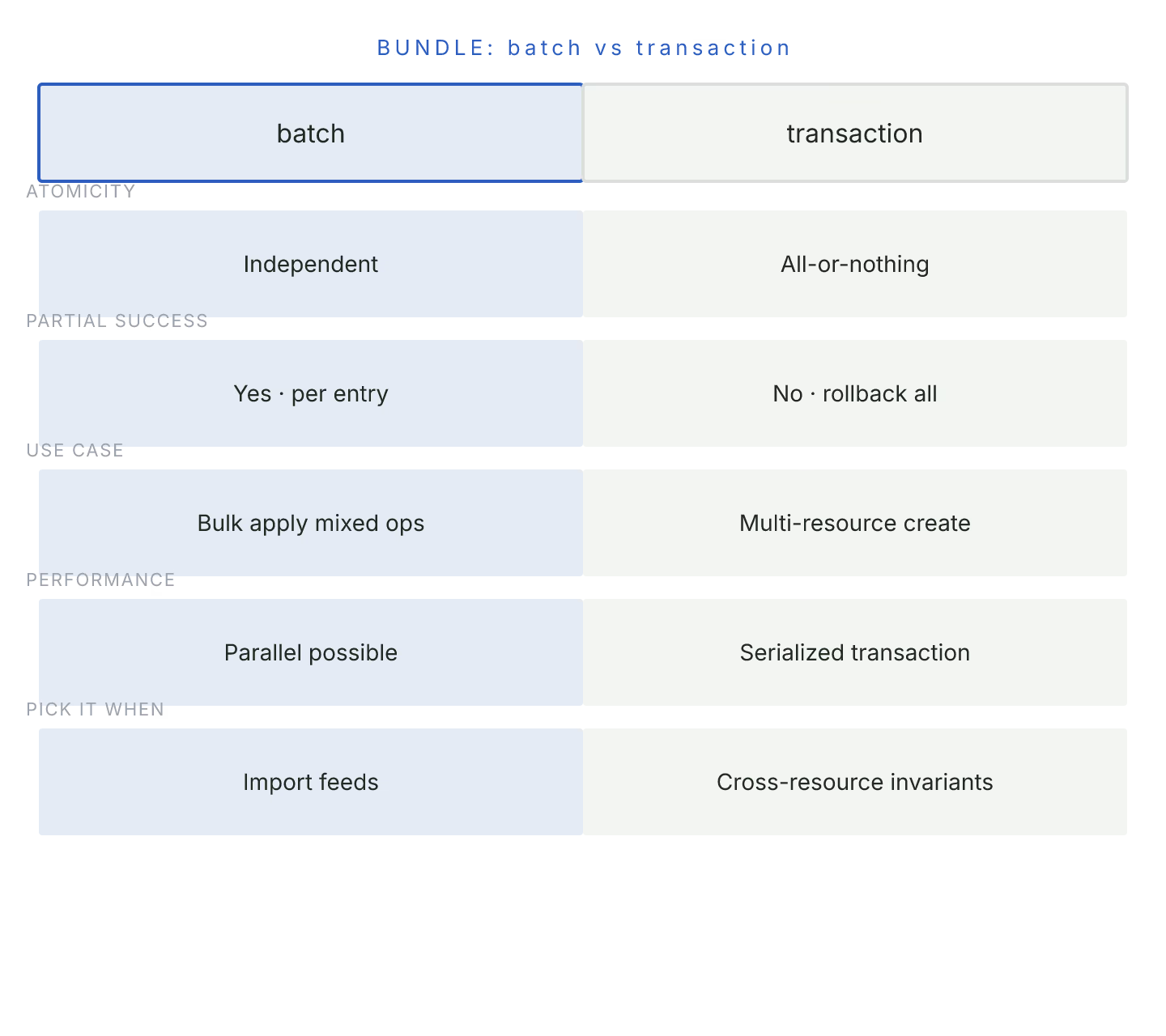
FHIR, or Fast Healthcare Interoperability Resources, is a standard for exchanging healthcare information electronically. A bundle is essentially a container that groups together multiple FHIR resources into a single message. These resources can include anything from patient demographics and lab results to medication lists and appointment schedules. They package it all neatly, making it easier to transmit and process. Think of it as a digital envelope containing all the necessary patient information for a particular transaction.
Why are FHIR Bundles so important in US health care?
The US health care system is notoriously fragmented. Doctors, hospitals, insurance companies, and pharmacies often operate on different systems, making it difficult to share patient information seamlessly. This lack of interoperability can lead to inefficiencies, errors, and ultimately, poorer patient outcomes.
FHIR bundles provide a standardized way to exchange data between these disparate systems. By using a common format, they eliminate the need for complex data translations, allowing information to flow smoothly and accurately. This, in turn, has a number of positive effects.
- Improved Interoperability − FHIR bundles act as the glue holding together various health information systems. They empower doctors to access a patient’s complete medical history, regardless of where they received care. This knowledge allows for more informed decisions, better diagnoses, and more effective treatment plans.
- Enhanced Patient Care − When health care providers have a complete picture of a patient’s health, they can avoid errors such as duplicate tests or conflicting medications. This ultimately leads to safer, more personalized care.
- Streamlined Administrative Processes − From billing to insurance claims, FHIR bundles can simplify administrative tasks, reducing paperwork and improving efficiency. This saves time and money for both providers and patients.
- Support for Innovation − The standardized nature of FHIR bundles encourages the development of new digital health tools and applications. Developers can leverage this framework to create innovative solutions that improve patient engagement, remote monitoring, and disease management.
FHIR Bundle use cases
The benefits of using FHIR bundles extend beyond simply transferring data. They open the doors to a range of innovative applications, some of which are already transforming US healthcare.
- Data aggregation for Research − Imagine the power of compiling data from multiple sources to identify trends, track disease outbreaks, and evaluate the effectiveness of different treatments. FHIR bundles enable researchers to gather and analyze large datasets, leading to breakthroughs in medical knowledge.
- Secure data transmission − When a patient moves or sees a specialist in another location, their medical information can be securely transmitted using FHIR bundles. This protects patient privacy while ensuring that their new healthcare team has access to the information they need.
- Integration with Mobile Apps − Mobile apps are becoming increasingly popular for managing health information. FHIR bundles can be used to seamlessly integrate these apps with electronic health records (EHRs), allowing patients to track their progress, schedule appointments, and communicate with their providers.
Challenges and the Future
While FHIR bundles hold immense promise, several challenges need to be addressed to realize their full potential. One hurdle is the need for widespread adoption. Not all healthcare providers are currently using FHIR standards, and encouraging them to upgrade their systems is crucial.
Another challenge is ensuring data security and privacy. As more health information is shared electronically, it is essential to implement robust security measures to protect patient data from unauthorized access.
Despite these challenges, the future of FHIR bundles in US health care is bright. As more healthcare providers adopt these standards and as technology continues to evolve, we can expect to see even more innovative applications emerge. By breaking down data silos and facilitating the seamless exchange of information, FHIR bundles are helping to create a more connected, efficient, and patient-centered healthcare system. They represent a crucial step towards a future where technology empowers individuals to take control of their health and where healthcare providers have the tools they need to deliver the best possible care. This ongoing digital evolution will continue to improve patient outcomes and reshape the healthcare experience for all Americans.