Digital health care is transforming how Americans receive medical attention, manage their well-being, and interact with the health system. But how do we guarantee that the data fueling this revolution is accurate, consistent, and reliable? The answer lies in something called FHIR data validation. Let’s unpack this crucial concept and see how it’s reshaping the landscape of American health care.
What is FHIR and Why Does Data Validation Matter?
Imagine a world where every piece of medical information, from lab results to medication lists, could effortlessly flow between different systems. That’s the promise of FHIR, or Fast Healthcare Interoperability Resources. FHIR is a standard designed to make health data easily shareable and usable across various platforms, from electronic health records (EHRs) to smartphone apps.
Think of FHIR as a universal language for health data. It allows different systems to “talk” to each other without getting lost in translation. But even with a common language, misunderstandings can happen. That’s where data validation comes in.
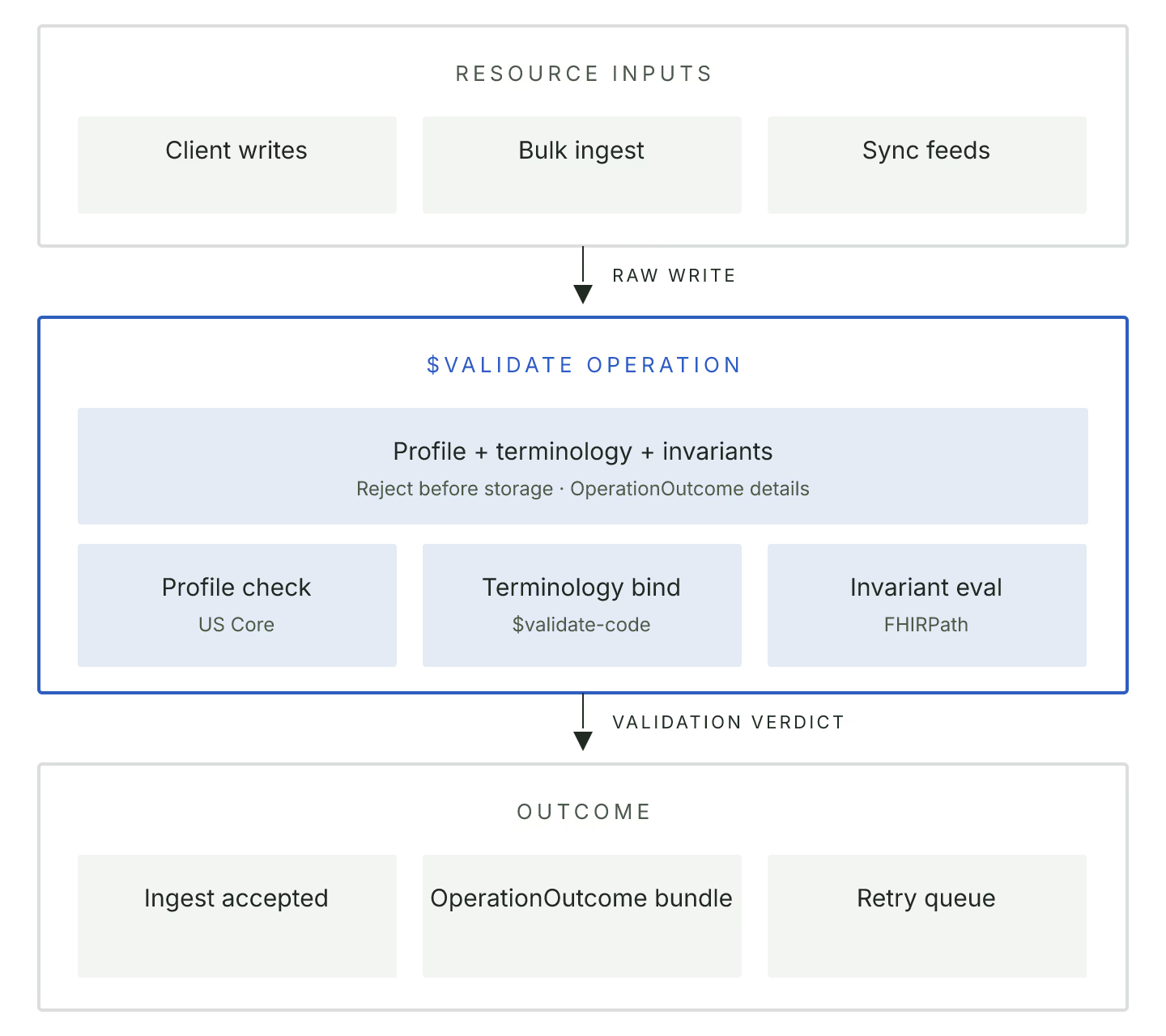
Data validation is the process of verifying that the data conforms to a predefined set of rules and standards. In the context of FHIR, this means ensuring that the data is not only formatted correctly but also contains accurate and meaningful information. Why is this so important? Because inaccurate or incomplete data can have serious consequences, leading to incorrect diagnoses, inappropriate treatments, and even patient harm.
The Role of FHIR Data Validation in Improving Health Outcomes
So, how exactly does FHIR data validation translate into better health outcomes? Let’s look at a few key areas;
-
Enhanced Interoperability; FHIR data validation ensures that data exchanged between different systems is consistent and reliable. This allows health care providers to have a complete and accurate picture of a patient’s medical history, regardless of where that patient has received care. Think about a patient seeing a specialist after being treated by their primary care physician. With validated FHIR data, the specialist can quickly access and understand the patient’s medical record, avoiding potential delays and errors.
-
Improved Decision-Making; When health care providers have access to validated data, they can make more informed decisions about patient care. This can lead to more accurate diagnoses, more effective treatments, and better overall outcomes. For example, imagine a doctor using a clinical decision support system that relies on FHIR data. If the data is validated, the system can provide more accurate and reliable recommendations, helping the doctor make the best possible treatment plan for the patient.
-
Reduced Errors and Costs; Inaccurate or incomplete data can lead to medical errors, which can have devastating consequences for patients and can also be costly for the health care system. FHIR data validation helps to prevent these errors by ensuring that data is accurate and complete. This can lead to significant cost savings by reducing the need for rework, retesting, and readmissions.
-
Empowered Patients; FHIR data validation can also empower patients by giving them more control over their own health information. With validated data, patients can be confident that the information they are seeing is accurate and reliable. This allows them to be more active participants in their own care, asking informed questions and making better decisions about their health.
The Future of Digital Health Care and Validated FHIR Data
The push for digital health care is only going to accelerate in the coming years. As more and more health data is digitized and shared electronically, the importance of FHIR data validation will only continue to grow.
Consider, for instance, the rise of telemedicine. With more patients receiving care remotely, it’s crucial that health care providers have access to accurate and reliable data, no matter where the patient is located. FHIR data validation makes this possible, ensuring that telemedicine providers have the information they need to provide high-quality care.
Furthermore, FHIR data validations are also playing a key role in the development of new and innovative health care technologies. From artificial intelligence-powered diagnostic tools to wearable devices that track vital signs, these technologies rely on accurate and reliable data to function effectively.
Overcoming Challenges in Implementing FHIR Data Validation
While the benefits of FHIR data validation are clear, there are also challenges to its implementation. One of the biggest challenges is the complexity of the FHIR standard itself. FHIR is a powerful and flexible standard, but it can also be difficult to understand and implement correctly.
Another challenge is the lack of standardized tools and processes for FHIR data validation. While there are some tools available, they are not always easy to use or well-integrated with existing systems.
To overcome these challenges, it’s important for health care organizations to invest in training and education for their staff. They also need to work with vendors to develop standardized tools and processes for FHIR data validation. By addressing these challenges, we can unlock the full potential of FHIR and transform digital health care in the USA.
In conclusion, FHIR data validation is not just a technical detail; it’s a critical foundation for the future of digital health care. It strengthens interoperability, improves decision-making, cuts errors, and empowers patients. As we move further into a digital world, guaranteeing the accuracy and reliability of health data through rigorous FHIR data validations will be essential to achieving better health outcomes for all Americans.